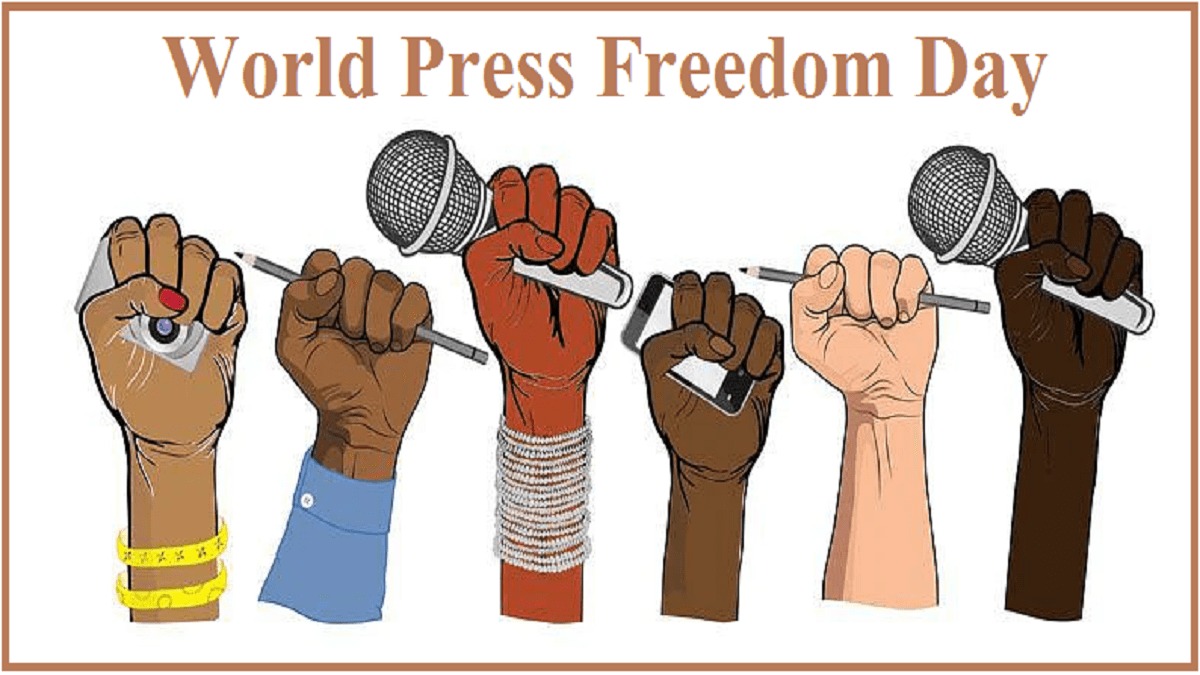
Every year, when we observe the World Press Freedom Day on 3 May, it’s expected that the media persons will get a safe, dignified and supportive ambiance to perform their duties globally. This year, prior to the auspicious day, the United Nations secretary-general António Guterres reiterated that it’s an important occasion and the UN recognizes the invaluable work of journalists and media professionals to ensure that the public is informed and engaged. Without facts, we cannot fight misinformation and disinformation. Without accountability, we will not have strong policies in place. Without press freedom, we won’t have any freedom. A free press is not a choice, but a necessity. Hence he called on all governments, private sector and civil society groups to join hands in reaffirming our commitment to safeguarding press freedom and the rights of journalists and media professionals around the world.
Needless to explain that, the world is going through an unprecedented environmental emergency that poses an existential threat to the present and future generations. People need to know about it and journalists and media workers have a key role in informing and educating them. Local, national and global media outlets can highlight stories about the climate crisis, biodiversity loss and environmental injustice. Through their work, people come to understand the plight of our planet and are mobilized and empowered to take action for change, stressed the UN secretary-general.
The media workers across the world also document environmental degradation and they provide evidence of environmental vandalism that helps to hold those responsible to account. It is no surprise that some powerful people, companies and institutions will stop at nothing to prevent environmental journalists from doing their jobs. When media freedom is under siege, environmental journalism emerges as an increasingly dangerous profession. Dozens of journalists covering illegal mining, logging, poaching and other environmental issues have been killed in recent decades. In the vast majority of cases, no one has been held to account.
The United Nations Educational, Scientific and Cultural Organization (UNESCO) recently reported that in the past 15 years, there have been some 750 attacks on journalists and media outlets reporting on environmental issues. The frequency of such attacks is only increasing. Legal processes are also misused to censor, silence, detain and harass environmental reporters, while a new era of climate disinformation starts focusing on undermining proven solutions, including renewable energy. However, the environmental journalists are not the only ones at risk. The mainstream media workers are risking their lives trying to bring us news on everything from war to democracy. It is indicated by the high number of journalists killed in Gaza since the Hamas terrorists attacked Israel to invite a counter offensive.
Shockingly on the special day, a senior journalist of Balochistan in western Pakistan was killed in a bomb explosion that took place in Chamrok area. Besides Maulana Mohammad Siddique Mengal, two others were also killed and many injured in the Friday blast. The injured were shifted to nearby hospitals for necessary medical treatment. Mengal, president of Khuzdar press club and a regular contributor to a newspaper titled Watan, was on his way to the mosque for prayers when two miscreants threw a bomb to his car and it exploded. The Geneva-based global media safety and rights body Press Emblem Campaign (PEC), while expressing serious concern over his killing, demanded a thorough investigation over the incident that led to his death. Siddique Mengal was the 43rd journalist to be killed this year around the world. PEC president Blaise Lempen mourned his demise and urged the Balochistan government to adequately compensate the bereaved family. Only a few weeks back the south Asian nation lost another journalist named Jam Saghir Ahmed Lar, who used to work for Daily Khabrain from Punjab province, to assailants. Prior to him, a Pakpattan-based journalist (Tahira Nosheen Rana) was brutally assassinated. Since 1 January 2024, four journo-casualties have been reported from Myanmar (which lost Ko Myat Thu Tun to military atrocities) and Pakistan in the Asian region. Till date, Bharat has not reported any incident of journo-murder and it’s only hoped that it will continue the trend.
Musings on Press Freedom Day