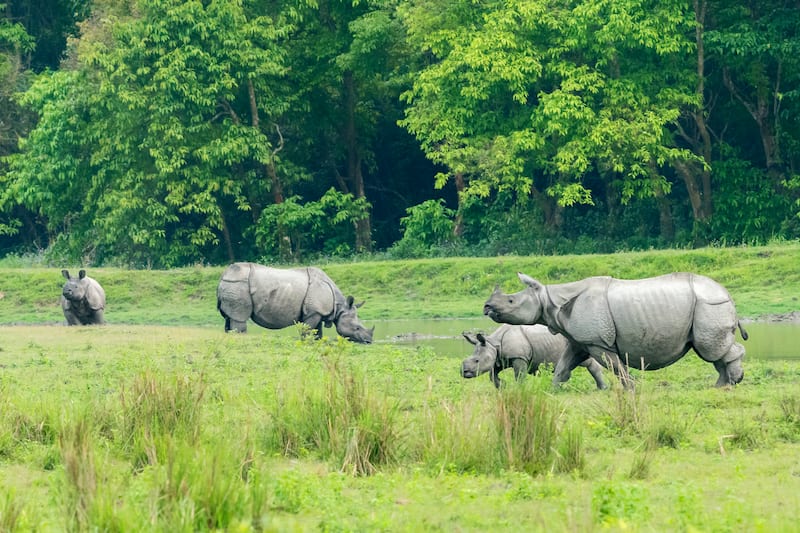
 The poaching of one-horned rhinoceros has returned to Kaziranga National Park in the first month of 2024, as two rhinos were killed in its Agaratoli forest range. The on duty forest staff recovered the carcass of a single horn rhino near Maklung forest camp, while making their routine patrolling on 22 January. The precious horn had gone missing. It was apprehended that the adult rhino, often killed for its horn that fetches a few million dollars in the illegal wildlife market, was poached on the previous night. The second rhino carcass was detected by the elephant patrol party on 26 January within a kilometer. The killing of two rhinos on a single day was shocking news for the wildlife enthusiasts, responding which the park authority engaged a number of forest officials and police personnel in the investigation process. Their prompt efforts resulted in detention of a suspected poacher (identified as Joggu Pegu, a resident of Mohuramukh in Golaghat district) and recovery of a horn with an AK series assault rifle within days. The second horn is yet to be recovered.
The authorities have intensified surveillance and patrolling to prevent the criminals from poaching more wild animals. An individual from Manipur is also identified as being involved with the crime as a shooter. Assam police chief GP Singh, who also leads the special rhino protection force in Kaziranga, appreciated the ground staff for the outstanding robe. He also expected public support and cooperation to eradicate the poaching of wildlife for good. Kaziranga park authorities earlier recovered 79 rhino carcasses with horns which died due to natural causes. Incidentally it was the first case of rhino poaching this year in Assam, which even enjoyed the zero-poaching year in 2022. Kaziranga and also Manas National Park & Tiger Reserve lost two rhinos each to the poachers. Kaziranga witnessed last year’s poaching in March. On the other hand, Manas forest reserve witnessed the poaching incident in June ( even though the authority believes that the animal was killed a few weeks back).
The incident sparked a series of protests by local environment and wildlife enthusiasts against the authority for its failure in protecting the wildlife. An umbrella body of 14 local organisations demonstrated their anger against a section of corrupt and irresponsible forest officers. Even a group of youths shaved their heads publicly on 9 July to show solidarity to the cause of wildlife conservation. An UNESCO world heritage site Manas forest reserve (like Kaziranga), gives shelter to around 45 rhinos. On the other hand, Kaziranga supports over 2,613 rhinos (out of 4,000 global one-horned rhino population). Other reserves of Assam namely the Pobitora Wildlife Sanctuary (around 107 rhinos) and Orang National Park (125) support the rhino population to increase up to 2650 individuals. With a drastic reduction in poaching following the deployment of heavily armed ground forces and other modern gadgets, Assam expects to increase the rhino population to 3,000 soon.
The new year also brought good news as two rhinos were sighted in Laokhowa & Burhachapori forest reserves after many years. State chief minister Himanta Biswa Sarma recently shared a photograph in social media expressing delight for the return of rhinos to those reserves. Those reserves used to give shelter to nearly 50 rhinos till 1983, but the entire population was wiped out by the menace of poaching and grassland habitat loss. Number of poaching incidents is reduced in the last five years thanks to the brutal laws against the poachers, strengthening of staff inside the protected forest areas and awareness in the fringe localities. A number of poachers were also arrested and many died in the encounters with the security forces. The captured poachers and their associates admit that they had taken the risk of killing rhinos inside the restricted forest reserves because of unbelievable monetary benefits. It shows a complex socio-economic situation which may tempt an individual to indulge in the crime. Along with arming the forest staff and implanting brutal laws against the criminals, probably it’s time for creating more social consciousness to deal with the crisis more effectively.
Keeping Kaziranga poaching-free