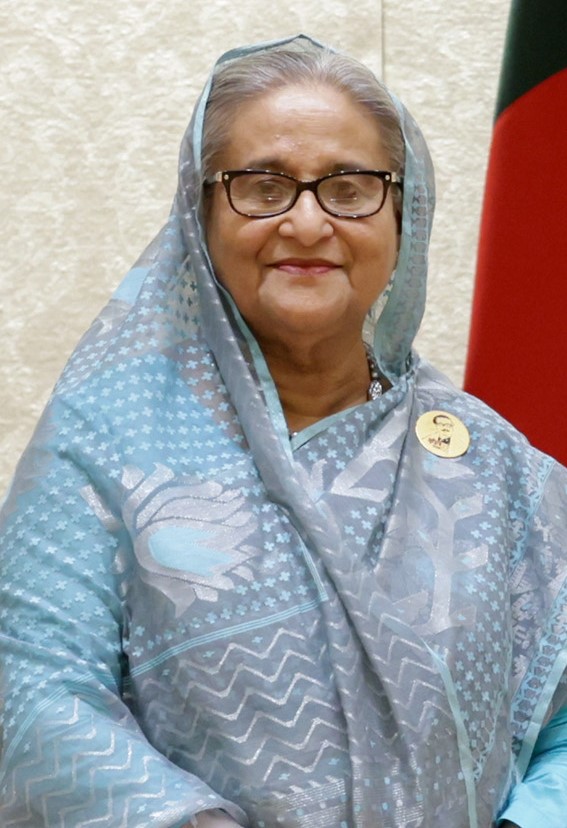
 When Bangladesh embraced 12th general elections on Sunday (a working day for the Muslim majority nation) amidst violence and boycott call from the prime opposition Bangladesh Nationalist Party (BNP), it was predicted that the ruling Awami League (AL) led by Prime Minister Sheikh Hasina wil win for the fourth consecutive term to lead the poverty stricken south Asian country. The incumbent AL won 222 Parliamentary seats, where the voters’ turnout was low. A compromised opposition Jatiya Party won 11 seats and three smaller parties emerged successful in one seat each. Significantly independent candidates succeeded in 62 constituencies, a record since its birth as a nation in 1971, to enter the Jatiya Sansad, the highest legislative body of the populous country which is strategically located between India and Myanmar.
The polling took place from 8 am till 4 pm, where nearly 120 million registered electorates were supposed to exercise their franchise under high security arrangements as the 170 million nation often report widespread poll-related violence, but less than 42% voters’ turnout was recorded. To encourage the electorate, PM Hasina, accompanied by her sister Sheikh Rehana and daughter Saima Wazed, cast her vote as the first individual in Dhaka City College polling station. Over 750,000 police and paramilitary forces were deployed on the ground, where Bangladesh Army, Navy, and Air Force personnel were on duty to ensure security during the single day polls in 261,912 polling booths under 42,024 voting centres across the country.
More than 200 foreign observers representing over 30 countries and organisations like the Commonwealth, European Union, US-based International Republican Institute, South Asia Democratic Forum, National Democratic Institute, etc were in the country to monitor the election. Three senior members of the Election Commission of India also joined the group. Over 20,000 Bangla observers representing 84 organizations were also engaged in the process.
Sporadic incidents of violence and rigging of polls were reported, as BNP leaders called for a 48-hour Hartal (general strike) beginning from 6 am on Saturday till 6 am on Monday. Alleging that polls under Hasina’s government would not be fair and fair, the BNP and its political allies stick to their demand to conduct the election under a neutral caretaker government in Dhaka, which Hasina denied. Jamaat-e-Islami, a radical party of Bangladesh, also took out processions in the capital city on Sunday supporting the BNP’s boycott call.
BNP’s president Khaleda Zia (78 years old) is ailing and with more to it the former Bangla Prime Minister is under house arrest for graft charges. Even the party’s acting president Tarique Rahman has been living in self-imposed exile since 2008. Son of former Bangla President Ziaur Rahman and Zia, even faced 18 months jail term before leaving to London and staying there till date. So the party has been termed as a leaderless entity on the ground and they are assumed not to be in a position to contest the elections.
Hasina (76) had earlier won the national elections continuously from 2008 to 2019 to establish herself as the longest-serving government head among women in the world. Daughter of Bangabandhu Sheikh Mujibur Rahman, Hasina maintained that only her party can lead Bangladesh towards peace, prosperity and growth. In the election manifesto, Hasina promised to convert the digital Bangladesh to a Smart Bangladesh. She also assured that her party will always protect and promote the spirit of democracy, offer quality education to youths, modernise agriculture, make healthcare services affordable to all, etc.
Even though the United States of America expressed dissatisfaction over the polls as not being ‘free or fair, India remains sympathetic to Hasina as she maintained a comfortable relationship with New Delhi. Her strong actions against the north-eastern militants (taking shelter in Bangladesh) as well as various initiatives to enhance bilateral economic ties with India had already been appreciated by the billion plus nation. It’s logically expected that the regime in Dhaka will safeguard the interest of religious minorities (Hindu, Buddhist, Christian, etc) in the land of Bengalis in any situation, as Hasina is traditionally considered as a pro-Indian in nature compared to her rival Begum Zia.