The newspaper industry in India faces an extreme challenge from the electronic and digital media outlets in the recent days, but it was
beyond speculations that the social media space would even spread rumours about the untimely demise of a prestigious newspaper like The
Statesman. But it happens in our country. One of India’s premier English dailies The Statesman was recently said to be closed down and
the information went viral in social media.
The entire Statesman House at 4, Chowringhee Square, Kolkata-700001 was rumoured to be sold to a businessman as early as in 2019. However
in reality the acclaimed newspaper, often termed as a symbol of prestige for its wise readers, continues publications from Kolkata,
New Delhi, Bhubaneswar and Siliguri. The Bengali Statesman has also been published regularly from Kolkata and Siliguri since it was
launched in 2004.
Both the newspapers have maintained the spirit of journalism with active support from millions of its valued subscribers. No doubt, like
all other English publications, The Statesman too faces a massive crisis during and after the Covid-19 disaster. The readership of
physical newspapers has drastically reduced and hence most media groups opt for entering into digital space for their survival with the
distinctive way of journalism.
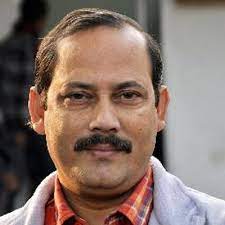
The origin of sad news for The Statesman was sourced at an ex-journalist (and now a famous Bengali cultural personality) Anjan
Dutt, who took up his pen to write about in the typical style using his facebook space and it was promptly spread to alternate media
users. Dutt worked in The Statesman at the age of 21 and was there to learn how to write. “I was told by my immediate boss, Ellis, that many
people read The Statesman to improve their English, not just news,” said Dutt in his piece.
“I was fortunate enough to have walked the resplendent corridors with legendary editors and assistant editors who spiked my articles
whenever it was fat with description and thin of information. Spiked again when they lacked atmosphere and was filled with information. I
had no fixed office hours so I could faff around throughout the week, but had to have my 1500 words of no faffing on Ellis’s desk by
Thursday noon,” added Dutt. I often had to chase senior assistant editors to Chota Bristol to get my article sanctioned when my boss was indisposed, remembered Dutt
adding, a whole legion of editors like Nihal Singh, Lindsay Emmerson, Sunanda Dutta Ray, Desmond Doig… critics like Dharani Ghosh, who
taught me that nostalgia is not mourning the past……So I, along with many of you, will always remember the fun of Calcutta Notebook. Miss
the Vintage Car Rally and whatever it stood for….. “This was the building where my boss gave me a job when I was not earning anything from doing theatre and could write what he believed
to be decent reading. It was here where the same boss, five years later, told me to leave and concentrate on performing arts because
that’s my future. A real place of work is not what teaches you what you are doing, but what you should be doing,” wrote Dutt. He concluded
the piece with these words ‘this piece would have been spiked if I wrote it as an obituary’. Founded in 1875, The Statesman has a long history of truly independent
journalism. It’s a direct descendant of two newspapers namely Indian Statesman (published from Bombay/Mumbai and The Friend of India
(published from Calcutta/Kolkata). Indian Statesman was started by Robert Knight, who was previously the principal founder and editor of
The Times of India. Knight merged the two papers in January 1875. Initially it was managed by a British corporate group.
The Statesman had taken its stands from time to time. It vehemently opposed Indira Gandhi’s Emergency in 1975–77. Earlier the newspaper
published a number of sensitive images reflecting the Bengal Famine (1943) despite the colonial government’s severe censorship. Those
images played a major role in changing the world opinion on imperialism. A founding member of Asia News Network, a grouping of 22 Asian
newspapers, The Statesman publishes a North East Page every Monday, which is carried by its all four editions (unlike other Indian
metropolitan newspapers, which normally dump northeast India’s news in the local edition only). Need not to state, The Statesman is still
honoured for its serious news reportage, analytical articles and use of standard English language.
For records, Anjan Dutt was communicated by this writer over his piece in facebook, but no response was recorded. Nonetheless, a facebook
post rumouring the demise of a mainstream newspaper is not welcomed anyway!
By Nava Thakuria